Copy of a Copy
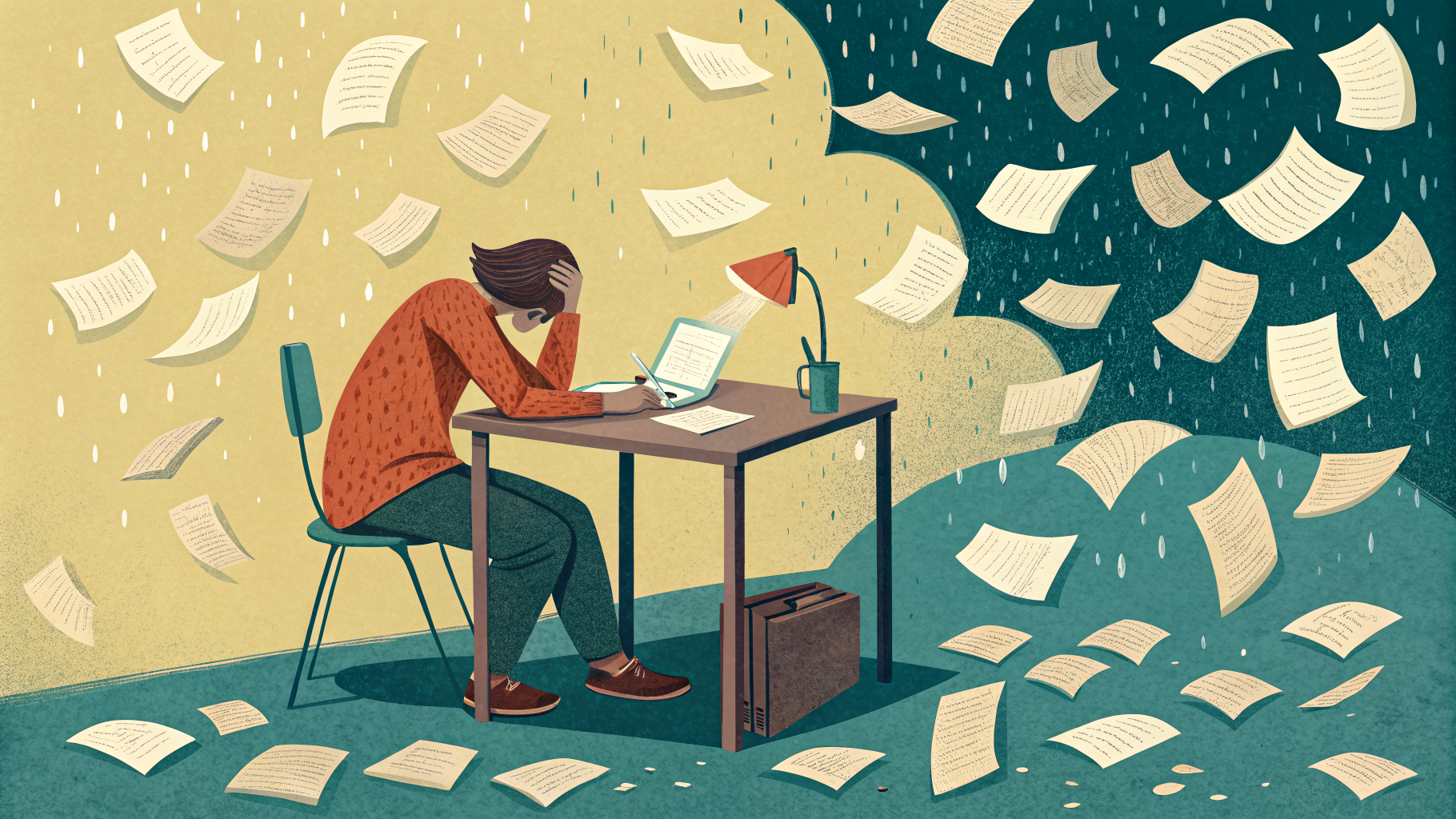
Illustration: Ciigma × Recraft V3
Everything is easy now#
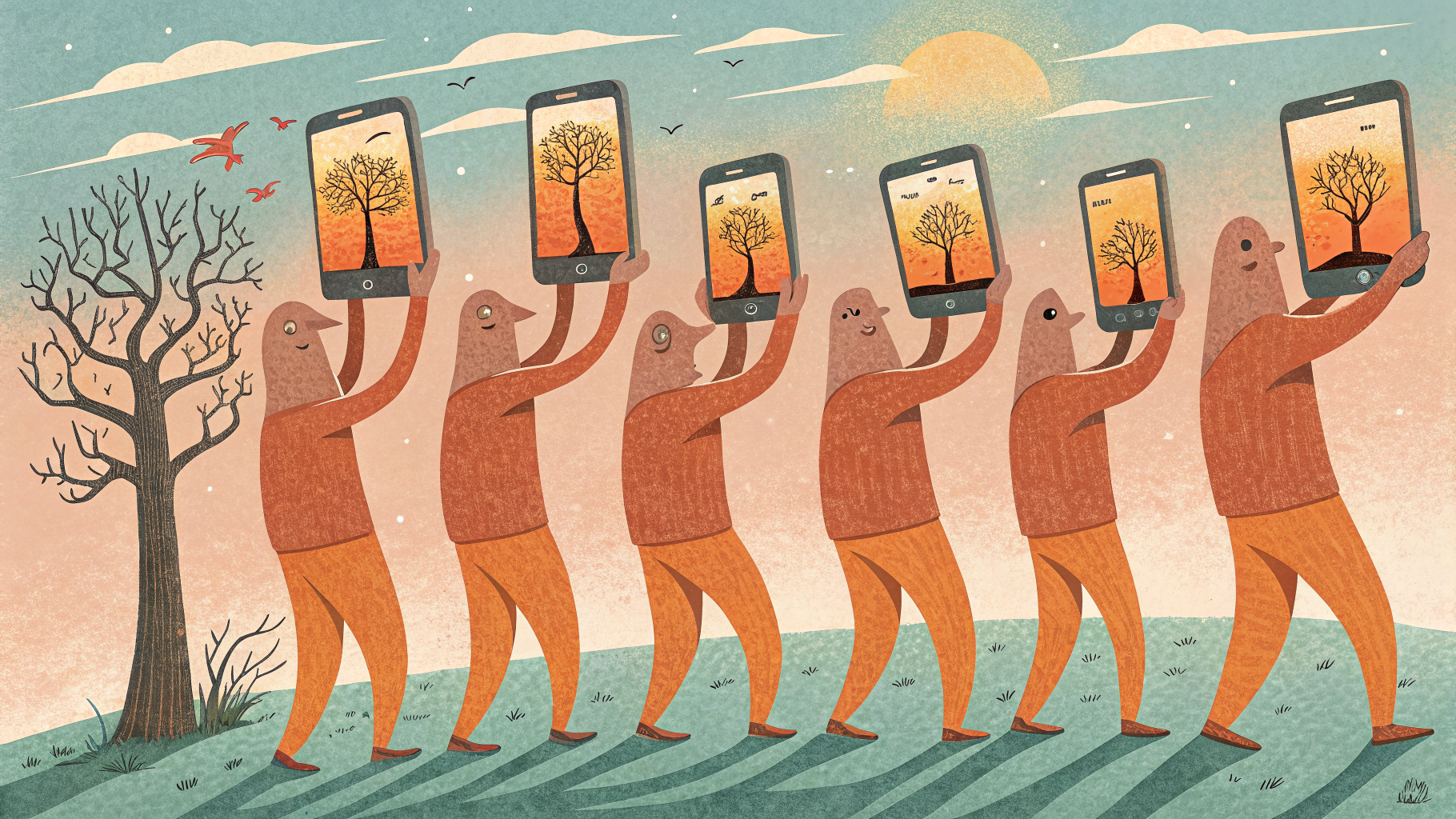
You can copy a brand voice, paste it into a prompt, and get 50 posts in ten minutes. You can screenshot someone's design, describe it to a model, and get something close enough that nobody notices. You can take a song, a paragraph, a visual style, feed it through the machine and out comes a version. Not the same. But close. Always close enough.
That's where we are. The cost of making things dropped to zero. Which sounds like a win until you realize what happens next.
When everything is easy to make, nothing is hard to ignore.
The overload problem#
Social media was built on scarcity of attention, abundance of content. That ratio worked when making content still required effort. A good photo took time. A strong essay took thought. A video took gear and editing and at least a basic understanding of pacing.
Now the supply is infinite. Not just more. Infinite. And most of it is a copy of a copy of a copy. Each iteration slightly blurrier than the last. Same hooks, same formats, same recycled opinions dressed up in new templates. The machines didn't create this problem. They accelerated it past the point where anyone can keep up.
People will lose interest. They still care about content. The signal-to-noise ratio just broke beyond repair. When your feed is 90% synthetic repetition, you stop scrolling with intent and start scrolling to kill time. That's surrender.
Traditional social media has a ceiling#
I don't see a bright future for the feed as we know it. The platforms are fine at what they do. The problem is what they do stopped working.
The algorithmic feed was designed for a world where humans made things and machines sorted them. Now machines make things and machines sort them. The human is just the audience. And audiences get bored when they can feel the machinery behind the curtain.
The platforms will keep growing by the numbers. More users, more time spent, more ads served. But the cultural relevance will fade. The best creators already feel it. The returns are shrinking. The same effort that built an audience three years ago now barely registers. The work didn't get worse. The ocean just got too deep to see the bottom.
Creatives will lead the exit#
This is where it gets interesting.
Every time a medium gets saturated, creatives leave first. They always do. They left galleries for the internet. They left blogs for Instagram. They left Instagram for TikTok. The old platforms didn't die. The creative energy just moved somewhere else.
The same thing will happen now, except the next move won't be to another social network. It'll be to something we don't have a word for yet.
New types of spaces. New interfaces. New ways of sharing that aren't built around the infinite scroll and the engagement metric. The people who will build those things are the same people who are right now feeling suffocated by the current system. The ones who notice that their best work gets less reach than a repost of a repost.
Creatives don't wait for permission. They build the room they want to be in.
What actually can't be copied#
Here's what the copy machine can't replicate: the specific way you see the world. Not your style. Not your technique. Those are copyable. But the reason you made something, the observation that triggered it, the taste that shaped the edit, that lives in a place no model can reach.
The creatives who survive this era won't be the ones who make the most. They'll be the ones who make things that feel like they came from a person. Specific. Opinionated. Weird in ways that only make sense because a real human decided it should be that way.
The machine can generate. It can't decide what matters.
What this means if you build things#
If you're a creative right now, the move isn't to compete with AI on volume. You lose that game before you start. The move is to go deeper into the things that make your work yours. The perspective. The taste. The willingness to make something that doesn't perform well by the algorithm's standards but resonates with the people who actually care.
The platforms will catch up eventually. New spaces will emerge where the currency isn't reach, it's resonance. Where the value isn't how many people saw it but how deeply it landed.
We're in the transition. It's uncomfortable. The old rules still apply enough to feel mandatory but not enough to feel rewarding. That tension is the signal. It means something new is about to be built.
The creatives who feel it first will be the ones who build it. If you're building something new, we can help.
Concept, draft & direction
Claude, tuned to Ciigma's editorial voice
AI editor