27 Hours a Week
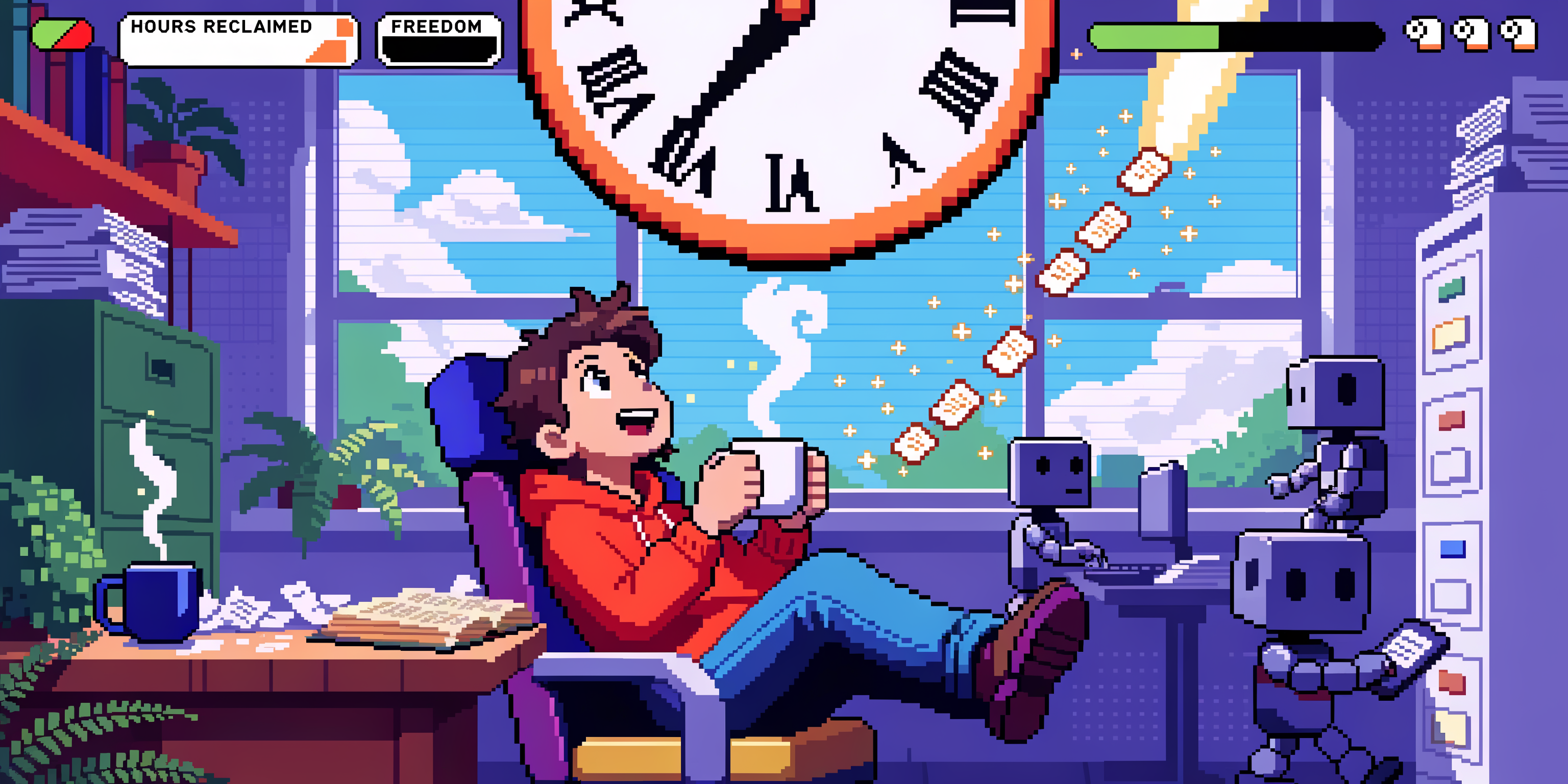
Pixel art: Ciigma × Recraft V4 Pro
The number hides something bigger#
The Spanish PYMEs that automate save 27 hours a week, on average. That's the headline number from the Cámara de Comercio's January 2026 PYME Digitalization Report. Productivity bumps 23% on top.
27 hours is a part-time job. A second business. Half a vacation per month. Pulled out of thin air, every week, forever.
You read that and your brain does math. The wrong math. You start thinking about labor cost. About what those hours used to cost in salary. Whether you can lay someone off and keep the savings.
Stop.
Time isn't money#
Money is recoverable. You can earn money back. You can lose a contract today and win two next week.
Time doesn't work that way. The hour you spent answering the same DM for the 200th time isn't coming back. The Tuesday morning your sales team spent qualifying leads instead of closing them isn't coming back.
That's why those 27 hours matter. They're the only thing on the balance sheet that never replenishes.
The ones who said yes#
At Benigni Tiles, the AI assistant we built has handled over 100,000 DMs and WhatsApp messages, plus 45,000 social comments, without a human typing a reply. The team didn't shrink. The team got faster. The same people who used to spend their day typing answers now spend it closing the leads the system flagged as hot.
At ClickEvent, the assistant replaces over 700 hours of human support work every month. The support team is still there. They moved up to the things that needed a person.
At Shades, Blinds & More of Texas, an automated system runs lead capture, follow-up, and scheduling. Year over year growth: 57%. A third of all sales now come straight from that system.
None of these companies fired anyone. They stopped doing work that was crushing them. They picked up the work they couldn't get to before.
Saying yes is hard. Going back is harder.#
Every owner I talk to about implementing AI flinches at the first yes. The brain wants reasons to wait. Maybe next quarter. Maybe after Q4. Maybe when the team is less busy.
The team is never less busy. That's the whole point.
But every owner who crossed the line tells me the same thing afterward. Nobody wants to go back. Nobody asks to disable the assistant. Nobody says we should return to the version where we miss DMs and forget to follow up.
Once those 27 hours come back, that becomes the new floor. Same way nobody goes back from running water. Nobody goes back from a phone with a camera in it. The reverse direction stops being an option.
Most owners reach out because they're a small team and they think the answer is hiring more people. By the time we've talked for fifteen minutes, the conversation moves. The question becomes how much each of these people can actually do, with the right tools behind them.
Once that question lands, it doesn't get put back. The owner who came in scared they'd need to cut payroll walks out planning how to grow without growing headcount.
What you do with the time#
That's the real question. Not whether to automate. What you do with what you get back.
Some owners use it to sell more. Some use it to build the next thing. Some use it to actually go home at six.
All three are correct answers.
The wrong answer is waiting another year to find out which one you'd pick.
The longer you wait, the more weeks you don't get back. That's the only math that matters.
Concept, draft & direction
Claude, tuned to Ciigma's editorial voice
AI editor