What Manual Follow-Up Actually Costs

Illustration: Ciigma × Recraft V3
You picked up the phone. Then what?#
Speed-to-lead gets all the attention. Respond in five minutes, 21x more likely to qualify. MIT studied 15,000 leads across 100 companies and published it in HBR. We wrote about it. The data is real.
But most businesses that solve first response still lose deals. The bleed doesn't happen at the door. It happens in the middle.
A lead fills out a form on Tuesday. You call back within an hour. They don't pick up. You leave a voicemail. Wednesday you remember to follow up. By Thursday you've got three new leads and Tuesday's prospect is a fading memory in your phone's recent calls.
The gap between touch one and closed#
Drift audited 433 B2B companies in 2018. 55% didn't respond within five business days. 27% never responded at all. The average response time among those who did? 47 hours.
That's touch one. The first response. The part everyone knows they should fix.
What almost nobody tracks is what happens after. How many follow-ups actually happen? Who owns the second text, the third call, the booking reminder, the no-show re-engagement?
In most small businesses, the answer is: whoever remembers. And humans are terrible at remembering systematically.
The costs that don't show up in a spreadsheet#
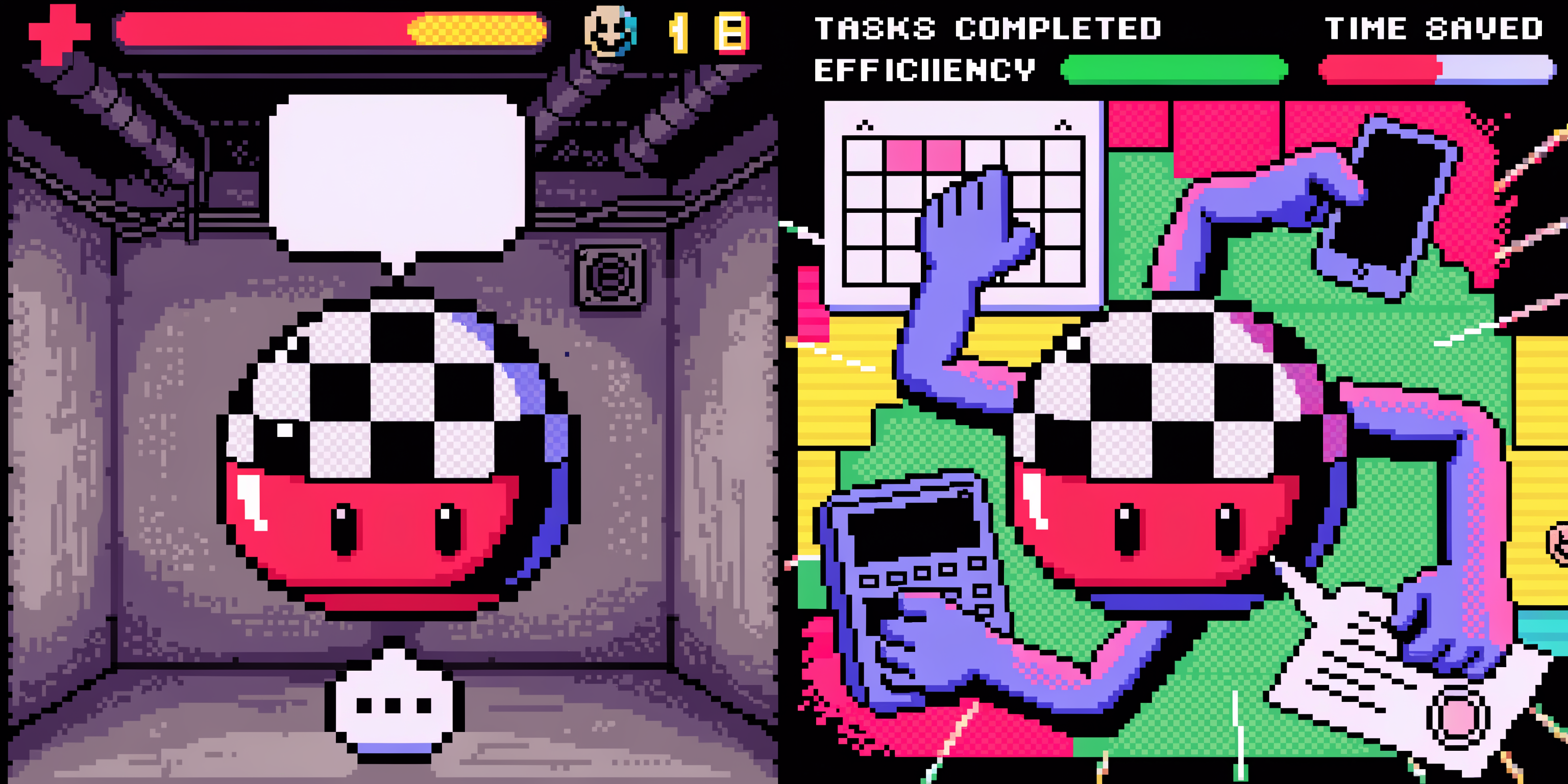
Manual follow-up burns three resources at the same time.
Time. Every lead needs context. Who is this person, what did they want, where are they in the process, when did we last talk? Pulling up that context takes minutes per lead. Multiply by 20 or 40 leads per week and you're spending hours just remembering where you left off.
Focus. Context-switching between doing the work and managing the pipeline creates a tax on everything. A plumber under a house can't also be nurturing a lead from yesterday. A real estate agent showing a property can't also be texting the prospect from last week's open house. The work and the pipeline compete for the same brain.
Consistency. Manual processes degrade under load. When things are slow, follow-up is easy. When business picks up (the exact moment it matters most), follow-up is the first thing that slips. The busier you get, the more leads you lose. Growth creates its own ceiling.
What it looks like when you remove the manual layer#
We've built automation systems for two very different businesses. The pattern is the same.
OpenAccess Realty had 120,000 Instagram followers generating constant inbound interest. Agents were drowning in DMs, missing follow-ups, losing deals to competitors who responded faster. We deployed AI-powered automation flows that handle intake, qualification, and instant booking. Response time went from hours to under one second. Result: ~100 automated bookings per week without manual intervention. Agents stopped chasing leads and started closing deals.
Trego Immigration Group needed to scale client conversations without losing the personal touch that immigration services demand. Every new inquiry required manual qualification, follow-up, and scheduling. We built AI chatbot-driven lead generation that qualifies and books automatically. Result: 5X conversion rates compared to traditional ads, 24+ weekly appointments with zero manual qualification.
Neither client hired more staff. Neither spent more on advertising. They captured the demand they were already generating. The revenue was always there. The pipeline was leaking it.
The compounding problem#
Here's the part that stings. Manual follow-up doesn't just lose individual deals. It caps your growth trajectory.
If your pipeline requires a human at every touchpoint, then your capacity equals your team's bandwidth. Add more leads and the system degrades. Hire more people and your margins shrink. You end up in a loop: spending money to generate leads, then losing them because you can't process them fast enough.
Automation breaks the loop. When the system handles intake, qualification, follow-up, booking, and reminders, adding more leads doesn't add more work. It adds more revenue. That's the difference between a business that grows linearly and one that compounds.
You probably already know this#
If you're running a service business, you've felt the pipeline tension. Too many leads to track in your head, not enough structure to catch them all, and the nagging feeling that something slipped through this week.
The question isn't whether to automate. It's how much longer you want to keep paying the cost of not doing it.
We build these systems. Here's how our automation practice works. And if you want to see the full case studies, start with OpenAccess Realty or Trego Group.
Concept, draft & direction
Claude, tuned to Ciigma's editorial voice
AI editor